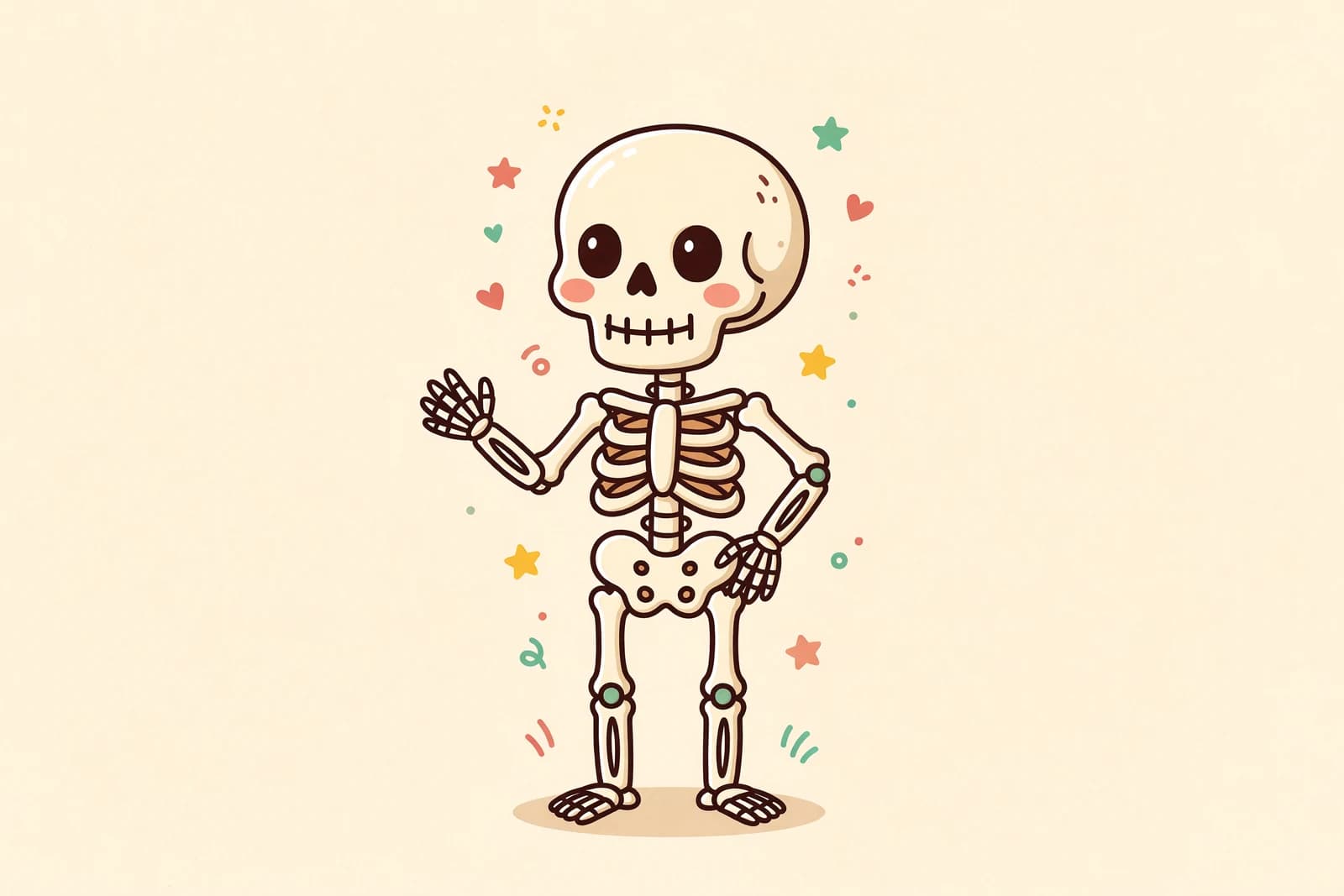
Learn how to draw a skeleton the easy way, from a stick-figure frame to the skull, ribs, and bones. A beginner-friendly, step-by-step guide, no experience needed.
Here's the trick to a skeleton: draw a stick figure first, then dress it in bones. The stick frame sets the pose and the proportions, so when you add the skull, ribs, and arms, everything lands in the right spot. In this guide you'll learn how to draw a skeleton step by step, the easy way, building a full-body skeleton from a light frame up to the rounded bones that make it look real. No experience needed, so let's rattle some bones.
Keep your frame light and loose. The early lines are just a map for the bones that follow.
What you'll need
- A pencil and an eraser
- Plain paper
- Optional: a black pen for outlining, plus white chalk or paper for a dark-background look
How to draw a skeleton step by step
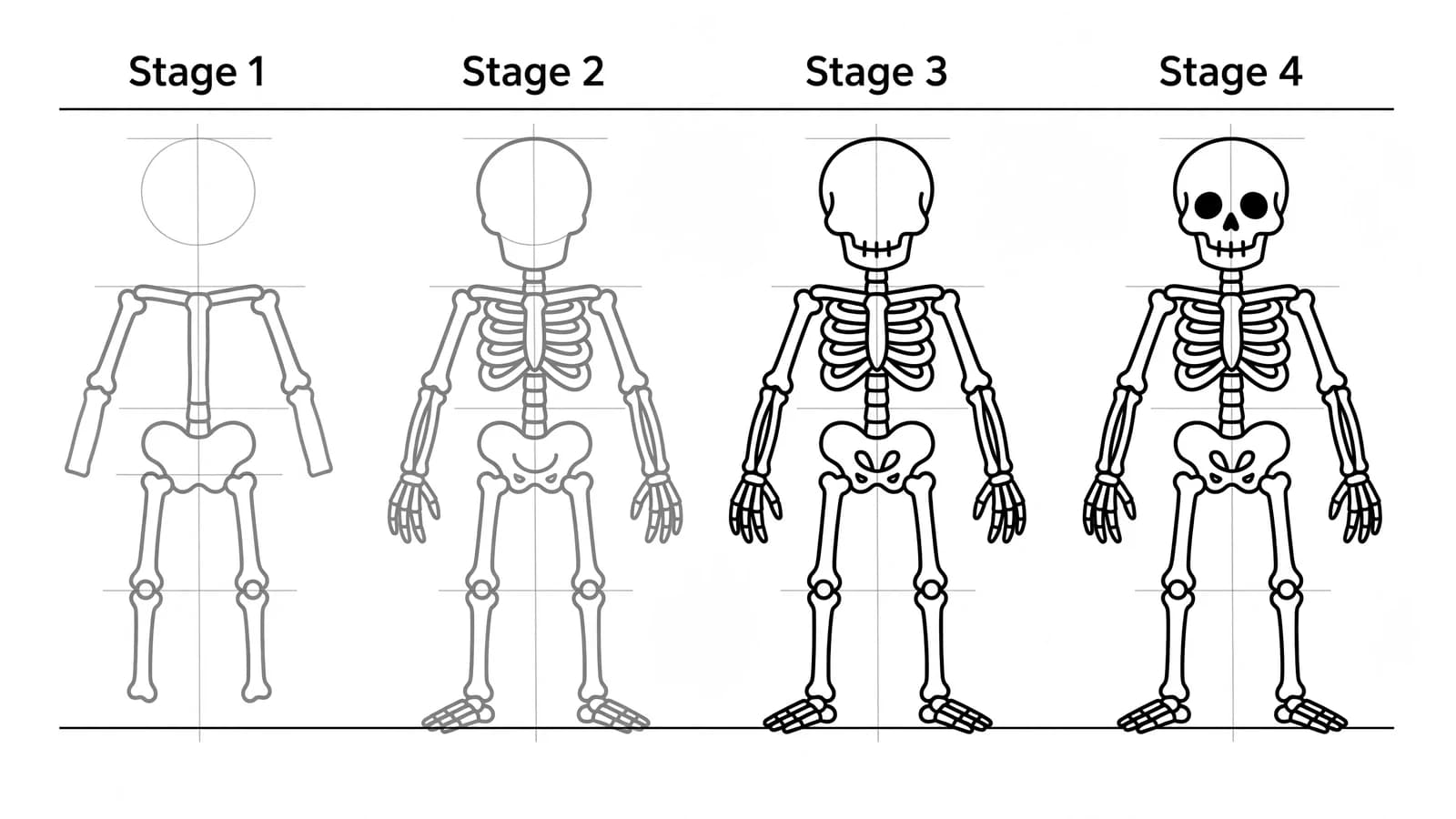
Beginner skeleton tutorials start by mapping the whole body with light shapes before drawing any single bone. One step-by-step skeleton tutorial has you sketch in the areas where all the body parts will go using a light circle and connecting lines first (How to Draw a Skeleton tutorial). We'll build on that same loose frame so your skeleton stands up straight.
Step 1: Draw a stick-figure frame
Lightly draw a circle for the head, a line for the spine, a short bar across the top for the shoulders, and a wider bar lower down for the hips. Add simple lines for the arms and legs. This stick frame sets your skeleton's pose and height before any bones go on.
Step 2: Draw the skull
Turn the head circle into a skull. Add a smaller rounded jaw at the bottom, two dark eye sockets, a little triangle nose hole, and a row of square teeth. The skull sits a touch forward of the spine, like a balanced ball on top.
Step 3: Add the ribcage and spine
Down the spine line, draw a stack of small shapes for the backbone. Then, hanging off the upper spine, draw the ribcage as a rounded basket: several curved lines on each side that get a little shorter toward the bottom, like an upside-down heart or a bell. Leave a gap, then add the hip bones as a rounded pelvis shape.
Step 4: Draw the arm bones
Along each arm line, draw the bones as long shapes that are narrower in the middle and rounded at the ends. One bone runs from the shoulder to the elbow, then two thinner bones run to the wrist. The Biowars skeleton guide recommends using "round lines" and making the bones "narrower in the middle" than at the ends so they read as real bone (Biowars).
Step 5: Draw the leg bones
Do the same for the legs: a thick thigh bone from hip to knee, then two bones from knee to ankle. Round each joint. Keep the bones gently curved, not straight tubes. Like the arms, position the major parts first, then refine the bone shapes (Biowars).
Step 6: Add the hands and feet
For each hand, draw a small block for the palm, then five sets of little finger bones. The Biowars hand tutorial suggests you sketch the palm bones first, then add the fingers (Biowars). Do the same for the feet: a wedge shape with small toe bones. These don't need to be perfect, just clusters of tiny bones.
Step 7: Outline and finish
Trace the bones you want to keep with a firm stroke or a black pen, then erase the stick frame and guide lines. Leave the skeleton white, or for a dramatic look, color the background dark and let the white bones pop. Add small shadows between the bones to make them stand apart.
What artists recommend (and common mistakes)
- Frame before bones. The most common beginner mistake is drawing bones one at a time with no plan, which leaves the skeleton crooked. Map the whole body with a light stick frame first (How to Draw a Skeleton tutorial).
- Round the bones, don't tube them. Real bones are narrower in the middle and bulge at the joints. Avoid sharp, uniform tubes; use round lines (Biowars).
- Place big parts first. For hands and feet, lay down the palm or foot shape before the little finger and toe bones (Biowars).
- Keep the ribcage curved. A flat, ladder-like ribcage looks stiff. Curve it into a rounded basket.
Fun variations to try
- A cute skeleton: A big round skull, huge eye sockets, and a small body make a friendly, cartoon skeleton for Halloween.
- A dancing skeleton: Bend the stick frame into a fun pose, with arms up and legs kicking, before adding bones.
- A full body skeleton chart: Add labels and extra detail for a science-class look.
- A spooky skeleton: Add cobwebs, a tattered cloak, or a lantern for a haunted-house scene.
Frequently asked questions
How do you draw a skeleton easy? Start with a stick-figure frame: a head circle, a spine, shoulder and hip bars, and lines for the limbs. Then add the skull, a curved ribcage, the pelvis, and rounded arm and leg bones. Building on the frame is what makes an easy skeleton drawing work.
How do you draw a full body skeleton? Draw the whole stick frame first so the proportions are right, then work top to bottom: skull, ribcage and spine, pelvis, arm bones, leg bones, then hands and feet. Keep the bones rounded and place the big parts before the small ones.
Why do my skeleton bones look wrong? They are probably drawn as straight, even tubes. Real bones are narrower in the middle and rounder at the joints, so use curved lines and let the ends bulge a little.
Keep drawing and coloring
A skeleton is the perfect partner for a skull drawing, and a great match for how to draw a spider when you build a spooky scene. Browse a page of scary things to draw for more eerie ideas, then print our free fantasy coloring pages to color bones, skulls, and creepy creatures. You've got this.