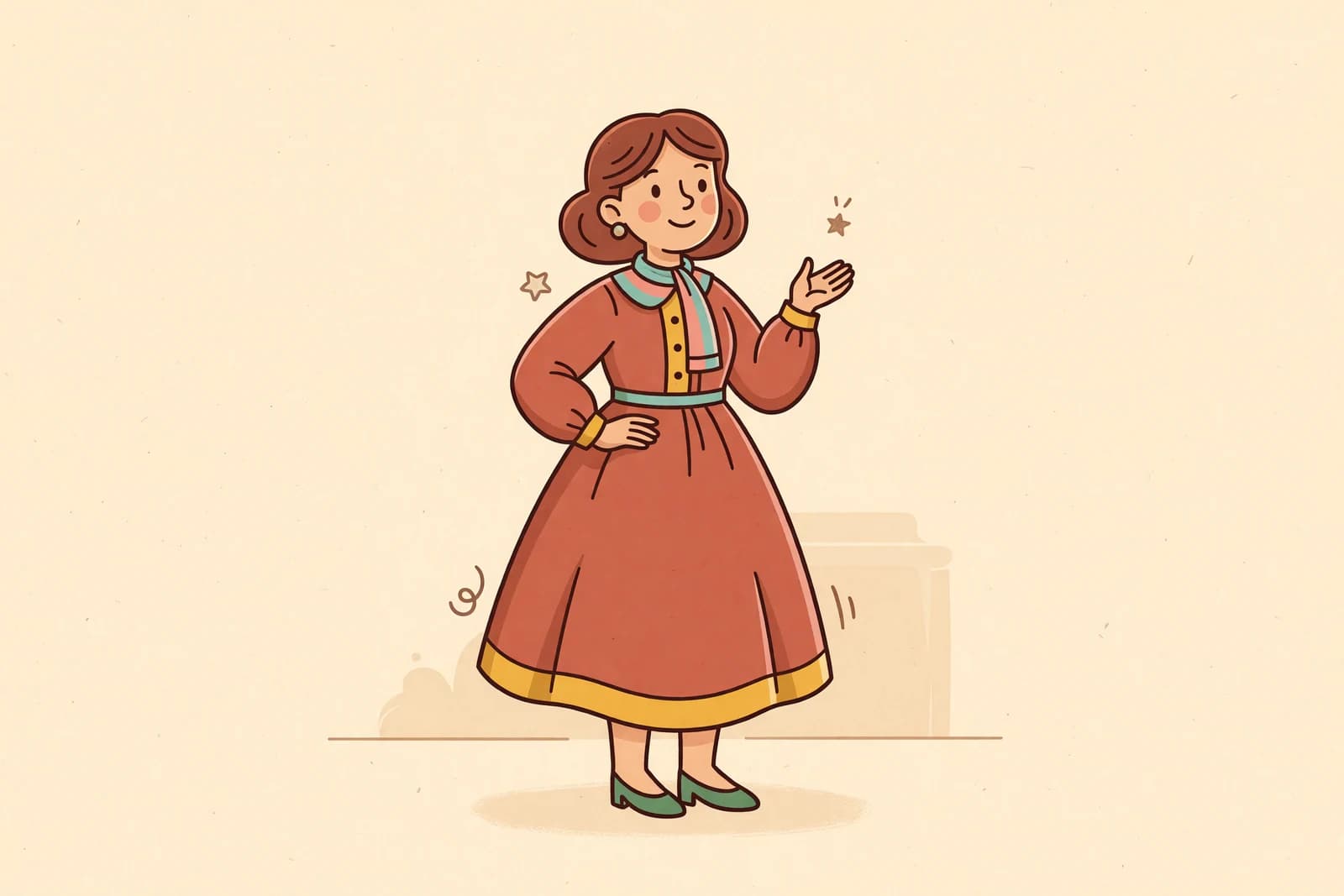
Learn how to draw a lady the easy way, from a gesture line and simple body shapes to a finished female figure. A beginner-friendly, step-by-step guide for all.
A full figure can feel like a lot to draw, but it starts with a single curved line. In this guide you'll learn how to draw a lady step by step, beginning with a loose gesture line and a few simple body shapes, then growing them into a friendly, standing female figure. This same approach works whether you want to draw a woman, a girl, or any character, because every figure is built the same way: light guides first, details last.
We'll draw a calm, standing pose seen from the front, since that's the clearest way to learn proportion. Keep your lines light so the early guides can disappear later. Let's begin.
What you'll need
- A pencil and an eraser
- Plain paper
- Optional: a black pen for outlining, plus markers or colored pencils
- Optional: a photo reference of a standing pose to check proportions
How to draw a lady step by step
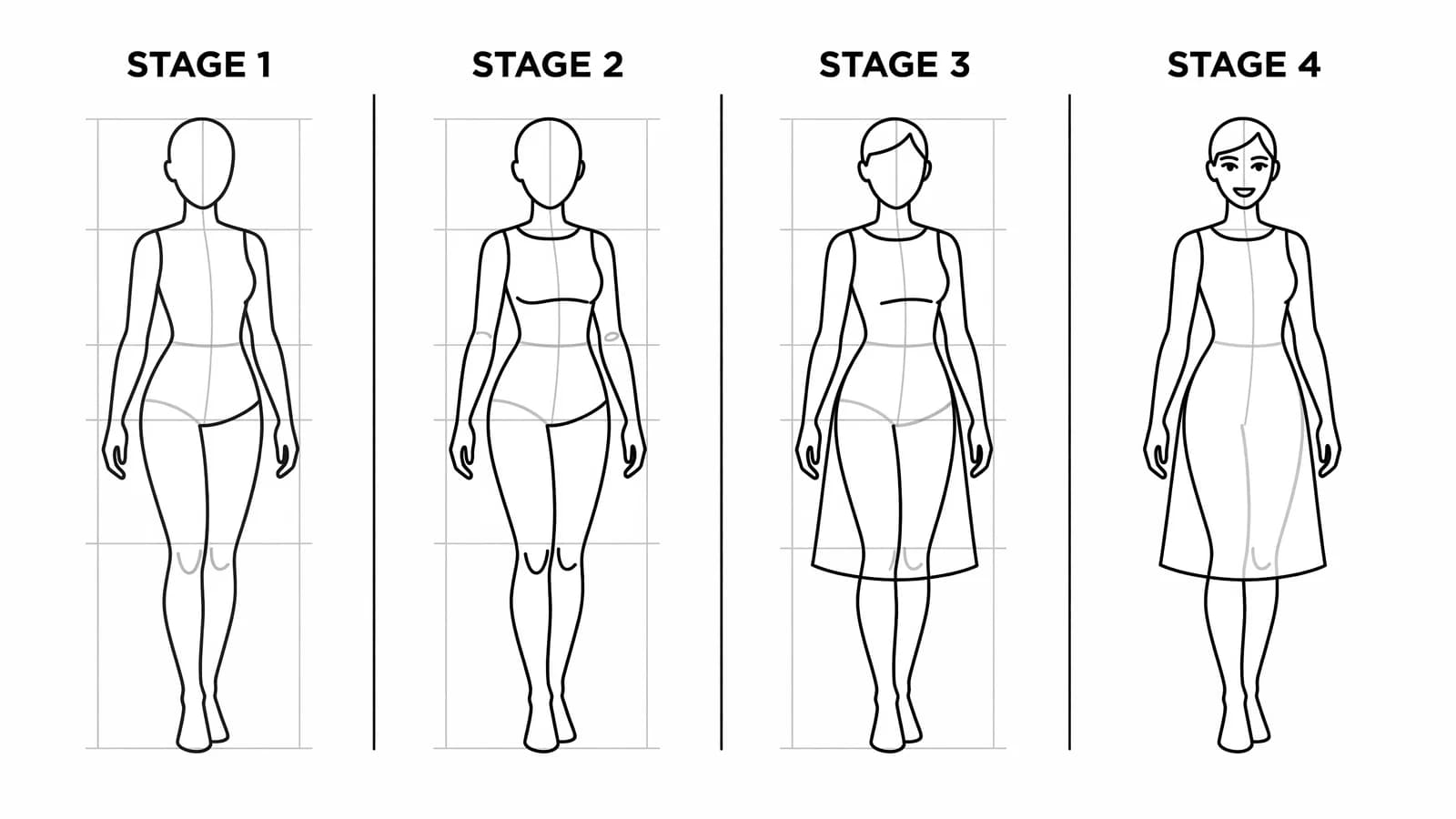
Step 1: Draw the gesture line
Before any shapes, draw one long, light curved line down the page for the pose. This is the gesture, the flow of the body from head to feet. Concept artist and educator Marc Brunet treats gesture as a core fundamental and encourages capturing a pose with as few lines as possible. A soft S-curve gives your lady a relaxed, alive feeling instead of a stiff stance.
Step 2: Block in the basic body shapes
Now build the body from simple volumes along that line. A core idea in Marc Brunet's fundamentals teaching is that most things you draw can be simplified down to simple geometric volumes. Draw an oval for the head, a rounded shape for the ribcage, a smaller rounded shape for the hips, and light cylinders for the arms and legs. Keep them loose. These shapes are just placeholders.
Step 3: Set the proportions
A simple proportion guide keeps the figure looking balanced. Picture the standing body as roughly seven head-heights tall: the head is one unit, the shoulders sit about one head down, the hips land near the middle, and the legs fill the bottom half. The waist tucks in slightly between the ribcage and hips. Mark these levels lightly across your shapes so nothing ends up too long or too short.
Step 4: Connect the body with smooth lines
Trace around your shapes with one flowing outline, smoothing the ribcage and hips into a gentle hourglass through the waist. Soften the shoulders, taper the arms toward the wrists, and shape the legs from the cylinders. The blocky guides melt into one continuous, natural silhouette.
Step 5: Shape the head and face
On the head oval, add a center line down and an eye line across. Place the eyes on the eye line, a small nose below, and a soft mouth lower still. Add a neck that flows into the shoulders. Keep the features light and simple. A few clear marks read as a face better than a pile of detail.
Step 6: Add the hair and clothing
Frame the face with hair that flows from the top of the head, falling in soft shapes around the shoulders. Then add simple clothing, like a dress or a top and pants, by drawing the fabric a little outside the body line. Let the clothing follow the figure's curves so it sits naturally rather than floating.
Step 7: Finish the hands and feet
Block the hands as small shapes at the ends of the arms, then hint at the fingers. Keep the feet simple wedge shapes, angled to sit flat on the ground. These small parts only need to suggest their form, so don't overwork them.
Step 8: Outline, erase, and color
Trace the lines you want to keep with a firmer stroke or a black pen, then erase the gesture line and all the block-in shapes. Color the figure with skin, hair, and clothing tones you like, leaving soft highlights so the body looks rounded. Your lady is finished.
What artists recommend (and common mistakes)
- Start with gesture, not details. Marc Brunet teaches that beginners who jump straight to eyelashes, hair, and clothing folds end up with stiff, awkward figures. Lay the pose and shapes down first.
- Simplify into volumes. Block the body from ovals and cylinders before you refine anything. Marc Brunet advises blocking out the whole drawing first, then focusing on details.
- Use reference, don't wing it. Marc Brunet suggests looking things up whenever you're unsure instead of guessing, and drawing from a pose until it feels natural. A quick photo reference fixes most proportion problems.
- Watch the proportions. Keep the figure around seven head-heights and the waist between the ribcage and hips. A too-long torso or too-short legs is the giveaway of a rushed figure.
Fun variations to try
- A sitting pose: Bend the gesture line at the hips and knees to seat your lady on a chair or the ground.
- A walking pose: Tilt the shoulders one way and the hips the other, and stagger the legs for a sense of movement.
- Different outfits: Swap the dress for a coat, overalls, or a flowing gown to practice how fabric drapes over the figure.
- A back view: Turn the figure around and draw the hair, shoulders, and the line of the spine down the back.
Frequently asked questions
How do you draw a lady for beginners? Start with a single curved gesture line, then block the body from an oval head and rounded shapes for the ribcage and hips. Check the proportions, smooth the shapes into one outline, and add the face, hair, and clothing last. Building from simple shapes is far easier than drawing the whole figure at once.
What are the proportions for a female figure? A simple beginner guide is about seven head-heights tall: one head for the head, shoulders about a head down, hips near the middle, and legs filling the bottom half, with the waist tucked in between the ribcage and hips. Mark these levels lightly before you draw.
Why does my figure look stiff? Usually because the pose was skipped. Begin with a loose, curved gesture line to capture the flow of the body before adding any shapes, and your lady will look relaxed instead of rigid.
Keep drawing and coloring
Drawing a full figure gets easier every time you practice the gesture line. Next, sharpen the small parts with how to draw a hand, or try a stylized face with how to draw anime. For more inspiration, browse our aesthetic drawing ideas, then color a character of your own with our free girl coloring pages.