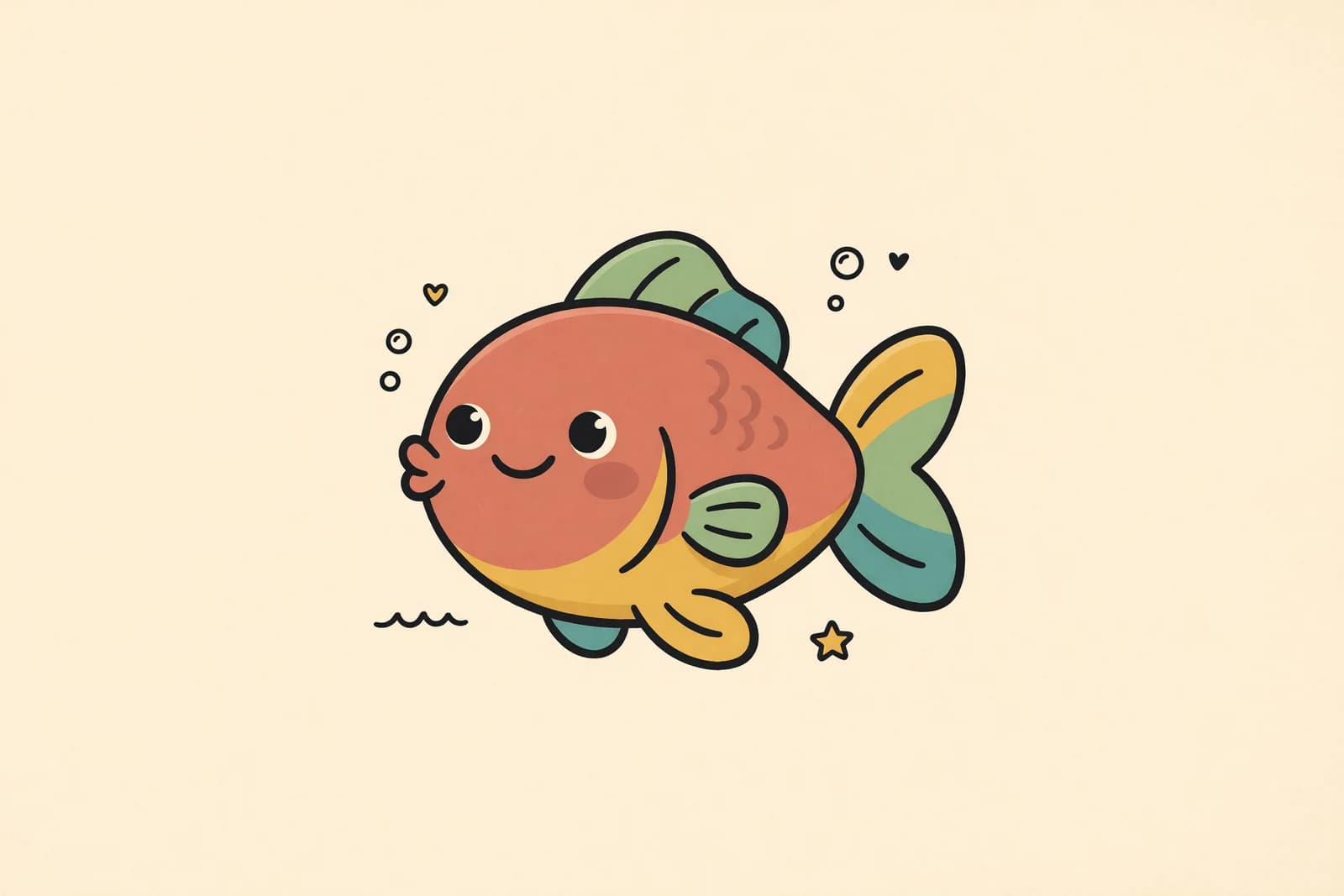
Learn how to draw a fish the easy way, from a simple body shape to fins, scales, and a happy face. A beginner-friendly, step-by-step guide with no experience needed.
A fish is a perfect drawing for a quick win, because the whole thing starts from one rounded body shape and a triangle tail. In this guide you'll learn how to draw a fish step by step, from that first simple block-in to the fins, scales, and a friendly bubble. No experience needed, and the same easy method works for a cartoon fish or a more detailed one.
Keep your early lines light so you can shape the body before adding details. Let's begin.
What you'll need
- A pencil and an eraser
- Plain paper
- Optional: a black pen for outlining, plus crayons or markers to color
How to draw a fish step by step
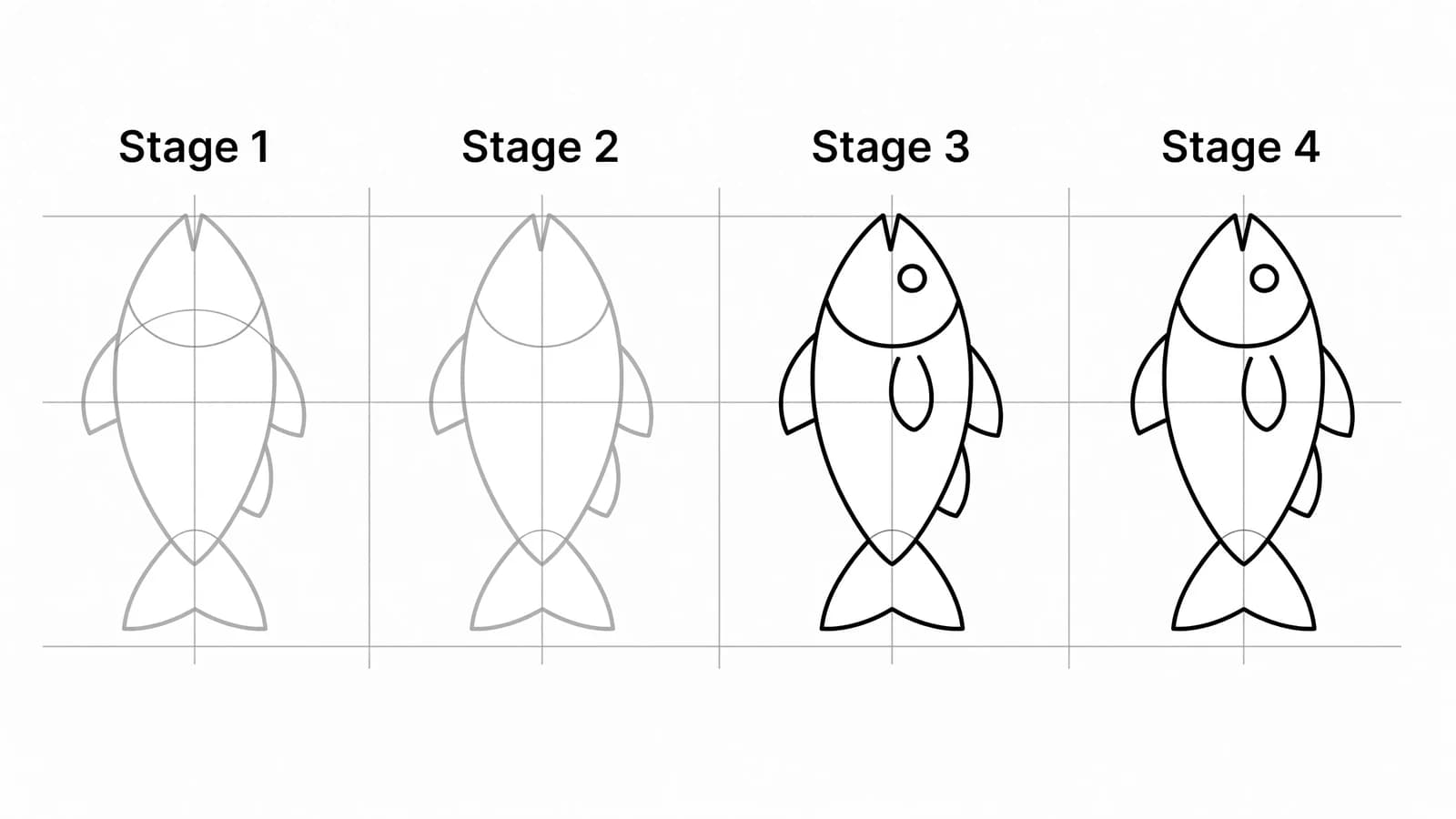
Step 1: Block in the body shape
Start with a light oval lying on its side for the body. Don't worry about details yet, just get the overall shape and size right. The simpler you keep this first block-in, the easier everything else becomes. The Virtual Instructor tutorial puts it plainly: outline the general shape of the fish first, because the simpler it is, the better, and what matters at this stage is the right proportions.
Step 2: Add the tail
At the back of the oval, draw a triangle that points away from the body, then curve the back edge inward so it looks like a fan or a wide "V." This is the tail fin. Connect it to the body with two short lines so it flows naturally.
Step 3: Draw the top and bottom fins
Along the top of the body, add a fin shaped like a low hill or a soft triangle. Add a matching smaller fin along the belly. These are what keep your fish from looking like a plain blob, so give them gentle curves.
Step 4: Add the side fin
Toward the front of the body, draw one small fin on the side, like a little flag or leaf shape. This side fin sits closer to you and helps the fish look round instead of flat.
Step 5: Draw the face
Near the front of the body, add a round eye with a dot in the middle. Then draw a curved line from the top of the body down to the belly to separate the head from the body. Add a simple curved mouth, open or smiling, right at the front tip.
Step 6: Suggest the scales
Instead of drawing every single scale, just hint at them. Add a few rows of small "U" shapes or short curved lines across the middle of the body. The Virtual Instructor advises not outlining the contour of every scale but only marking them, and naturalist John Muir Laws teaches arranging scales in patterns rather than copying every detail. A few suggested rows read as scales without overwhelming the drawing.
Step 7: Outline and color
Trace the lines you want to keep with a firmer stroke or a pen, then erase your light guide lines. To give the fish a little volume, press a touch harder on the lower contour so the belly looks like it's in shadow, a line-weight trick from the Virtual Instructor. Color your fish orange like a goldfish, blue and yellow like a tropical fish, or any bright storybook shade. Add a few bubbles rising from its mouth to finish.
What artists recommend (and common mistakes)
- Block in the big shapes first. Get the body, head, tail, and fins placed as simple masses before any detail. The Virtual Instructor stresses nailing the overall shape and proportions before anything else.
- Suggest texture, don't copy it. Hint at scales with a few light rows instead of drawing hundreds. Both the Virtual Instructor and John Muir Laws recommend implying scale patterns rather than outlining each one.
- Use line weight for volume. A slightly thicker line along the shadow side, with lighter lines where the light hits, makes a flat fish look round.
- Common mistake: starting with the pretty details before the structure is right. If you draw scales and a fancy tail before the body shape is correct, the proportions end up off. Build the simple shapes first, then add detail.
Fun variations to try
- Goldfish: Round body, big flowing tail, and a bright orange color.
- Tropical fish: Add bold stripes and a tall top fin in two or three colors.
- Pufferfish: Make the body a near-perfect circle and add lots of little spikes.
- Jellyfish: Swap the body for a soft dome and add long wavy tentacles trailing below.
Frequently asked questions
How do you draw a fish easy? Draw an oval for the body, add a triangle tail, then a top fin, a belly fin, and one side fin. Finish with an eye and a smiling mouth. Starting from one simple oval is what makes it easy.
How do you draw fish scales? Don't draw every scale. Add a few rows of small "U" shapes or short curved lines across the middle of the body to suggest the texture. A light hint reads as scales without taking over the drawing.
What is the easiest fish to draw? A simple cartoon fish or a goldfish, because both are just a rounded body, a triangle tail, and a couple of small fins. Skip the detail and keep the shapes round.
Keep drawing and coloring
Fish love company, so try how to draw a shark for an ocean scene, then add how to draw a turtle to round out your underwater crew. Looking for more ideas? Browse our easy things to draw list, and print our free animal coloring pages when you're ready to add color.