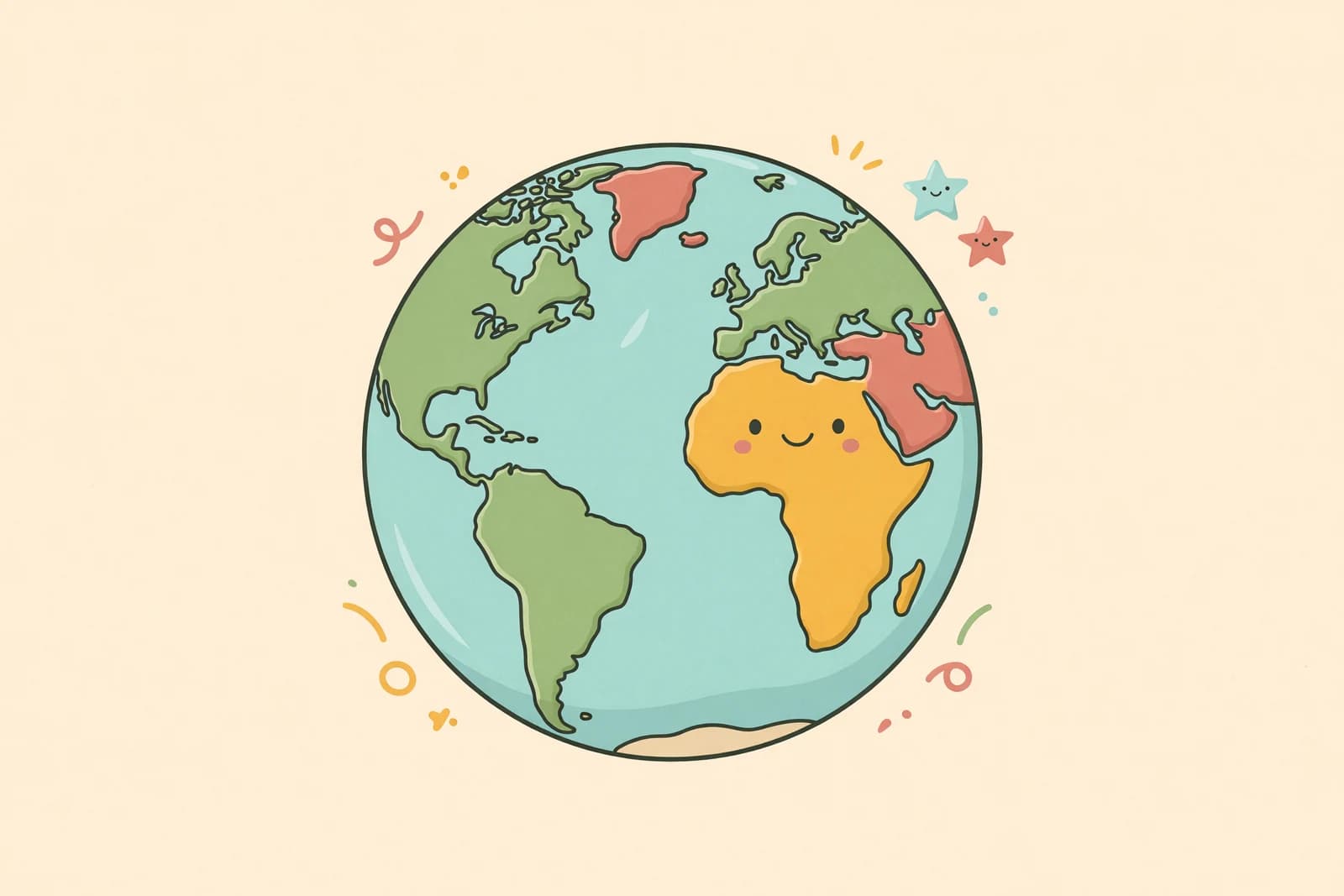
Learn how to draw the Earth the easy way, starting from one circle and simple continents. A beginner-friendly planet Earth drawing guide, no experience needed.
Our planet looks complicated from space, but drawing it starts with the easiest shape there is: a circle. In this guide you'll learn how to draw the Earth one calm step at a time, building from a round outline out to simple continents, oceans, and a soft glow of light. No experience needed, and no fancy supplies. If you can draw a circle, you can draw the whole planet.
We'll keep every line light at first so it's easy to nudge the land into place, then darken your favorite lines at the end. This easy planet Earth drawing works as a globe, a cartoon Earth, or a glowing world in space. Grab a pencil and let's begin.
What you'll need
- A pencil (a soft 2B is nice, but any pencil works)
- An eraser
- Plain paper
- Optional: a round lid or compass to trace a circle, a black pen, plus blue and green crayons or colored pencils
How to draw the Earth step by step
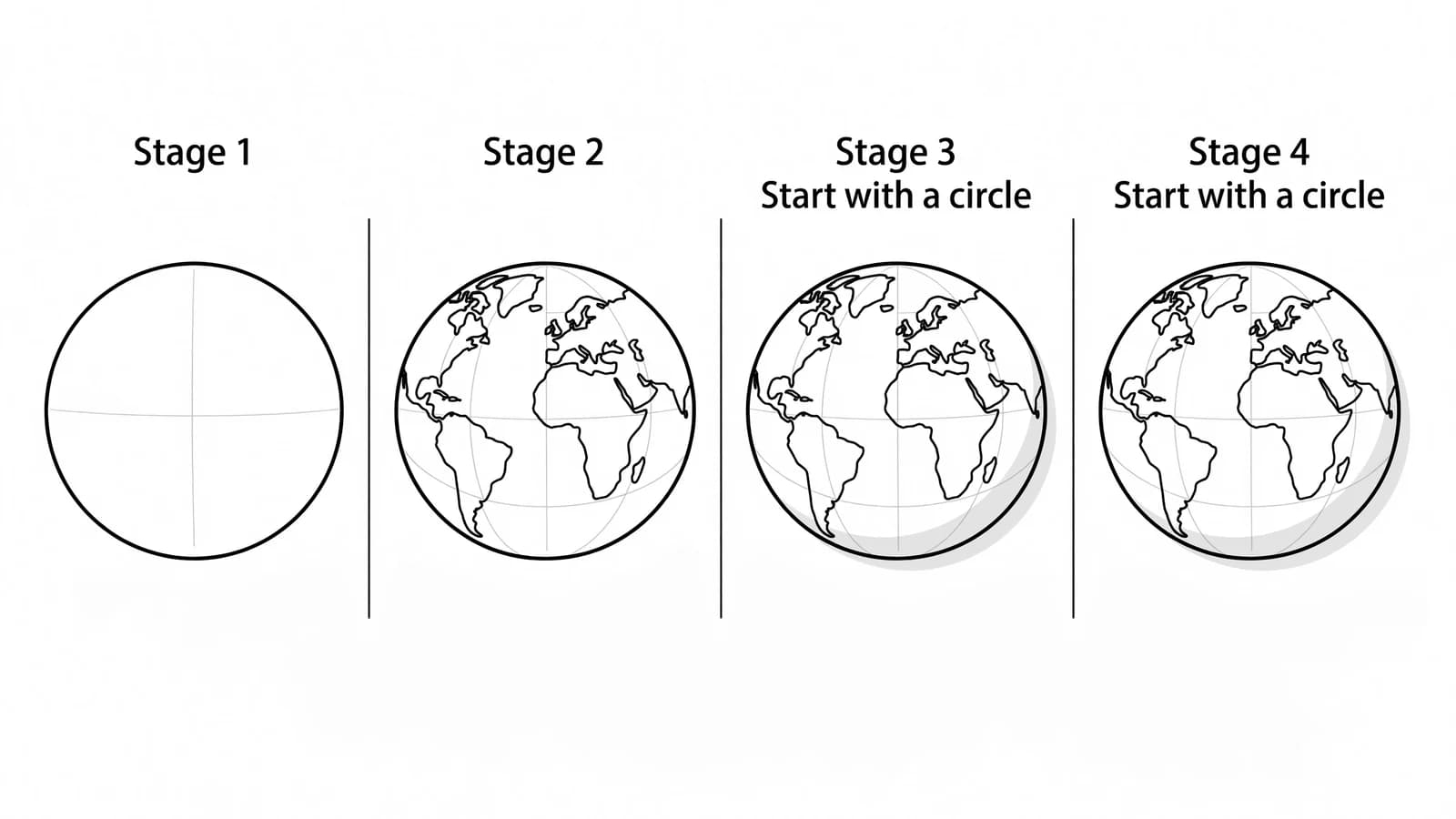
This is the foundation-first method most teachers use: start with a light circle, simplify the land masses, then add light and shadow last. K-5 art teacher Kathy Barbro of Art Projects for Kids opens her Earth lesson with one simple step: "Draw a circle or trace one." That circle is just a guide, not the final line, so press lightly.
Step 1: Draw the circle
In the middle of your page, draw a light circle. Don't worry about it being perfect. If you want a clean round shape, trace a cup, a lid, or a roll of tape. This circle is the whole planet, so leave a little space around it for the glow later.
Step 2: Sketch the continents lightly
Inside the circle, lightly sketch the land. Keep the shapes simple and a little blobby. You don't need every country, just the big land masses. If you're not sure how the continents go, look at a map. Children's art teacher Chiki Doodle encourages young artists to look at a map and copy the simplified land shapes when they're unsure how it goes. Copying a reference is smart, not cheating.
Step 3: Place one or two main land masses
For an easy Earth, you only need a couple of continents facing you. Try one large land mass on one side and a smaller one nearby, surrounded by ocean. Keep the edges wobbly and rounded, like puzzle pieces. The rest is all water, which is the blue you'll add later.
Step 4: Add coastline details
Now nudge the edges of your land to make them more interesting. Add a few small bumps, dips, and a tiny island or two in the ocean. These little touches make the planet feel real without you having to copy a map exactly. Keep them light so you can still adjust.
Step 5: Darken your lines and clean up
Go over the circle and the land edges with a firmer stroke or a black pen. Erase any stray guide marks. Your continents should now stand out clearly against the empty oceans. Take your time on the coastlines, since they are what people will notice first.
Step 6: Add light and shadow
Here's what makes Earth look round instead of flat. Pick one side as the sunny side and leave it bright. On the opposite side, add light shading that curves along the circle's edge, getting darker toward the rim. A thin crescent of shadow on one side instantly turns your circle into a globe floating in space.
Step 7: Color it in
Color the oceans blue, lighter where the light hits and deeper in the shadowed area. Color the land green with a few brown or tan spots for mountains and deserts. Add a swirl or two of white for clouds drifting over the surface. For a space look, color the background black and dot in tiny white stars.
What artists recommend (and common mistakes)
The most common mistake when drawing the Earth is drawing a "symbol" of a planet, a perfect circle with cartoon-blob continents, instead of really looking at the shapes. Art educator Betty Edwards calls this relying on a memorized "symbol system" rather than really looking. In Drawing on the Right Side of the Brain, she describes the goal as learning "to set your symbol system aside and accurately draw what you see." Here is how to put that to work:
- Start with a circle as a guide, not the final line. Art Projects for Kids begins with "Draw a circle or trace one," treating it as a construction shape you build on top of. Trace a lid if a freehand circle feels wobbly.
- Use a map and simplify. Don't guess the continents from memory. As Chiki Doodle tells young artists, look at a map and copy the simplified land shapes when you're unsure. Reference beats imagination here.
- Keep early marks light. Edwards' method has beginners just barely indicate placement with the first marks, searching for the correct relationships between shapes before committing. Sketch the land softly, then darken it only once it looks right.
- Avoid outlining too early and too dark. The classic beginner mistake is inking everything in heavy lines before the shapes are settled, so the land masses end up stuck in the wrong spot. Adjust lightly first, darken last.
- Don't forget the shadow. A flat, evenly colored circle reads as a ball, not a planet in space. The curved crescent of shade on one side is what sells the roundness.
Fun variations to try
- Cartoon Earth: Add two big eyes and a happy smile for a cute, friendly planet, perfect for stickers and Earth Day cards.
- Earth with a moon: Draw a smaller gray circle off to the side, with a few little crater dots, orbiting your planet.
- Hands holding the world: Draw two cupped hands beneath the Earth to show care for the planet.
- Map-style globe: Add curved grid lines (one down the middle and a few across) to make it look like a classroom globe.
Frequently asked questions
How do you draw the Earth easy? Start with a light circle, sketch simple blobby continents inside it using a map for reference, then darken your lines and add a curve of shadow on one side. Color the oceans blue and the land green. Keeping the land shapes simple is the easiest way.
How do you make the Earth look round? Add light and shadow. Keep one side bright as the sunny side, then shade the opposite edge darker so it curves along the circle. That crescent of shadow turns a flat circle into a globe right away.
Do I have to draw all the continents? No. For an easy Earth, just draw the one or two land masses facing you and fill the rest with ocean. A simple planet with a couple of green continents looks great and is much easier than fitting in every country.
Keep drawing and coloring
Now that you can draw the Earth, give it a home in the sky. Learn how to draw a star to scatter across your space scene, or how to draw a tree to grow on your green continents. Want more ideas? Browse cool things to draw, or print our free nature coloring pages to color planets, trees, and more. You've got this.