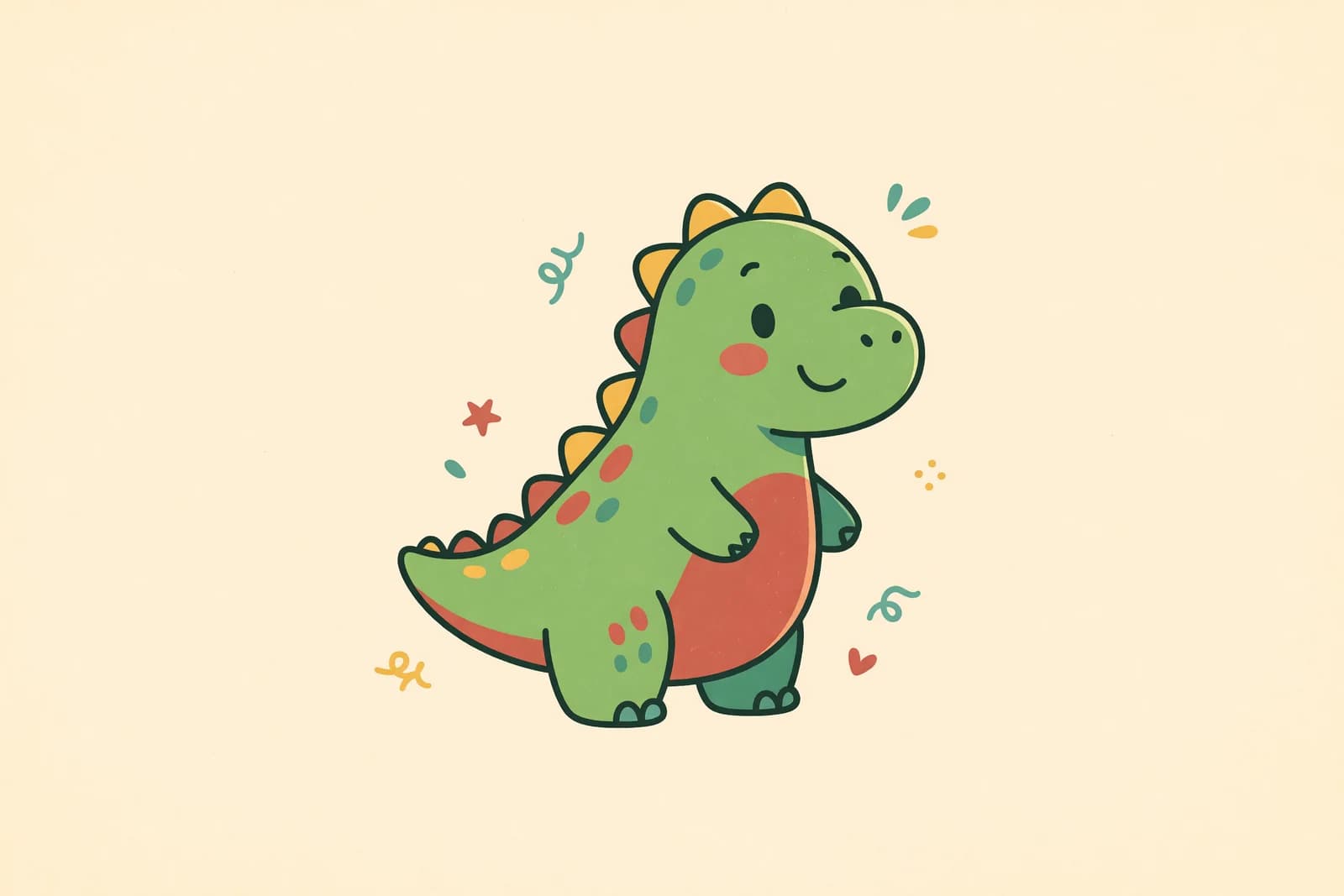
Learn how to draw a dinosaur the easy way, from a triangle and a circle to a finished T-rex. A beginner step-by-step guide for a cute or fierce dino, no skill needed.
Dinosaurs are big, bold, and surprisingly simple to draw once you know the trick. In this guide you will learn how to draw a dinosaur step by step, starting with a light triangle and circle, then growing them into a chunky T-rex with a long tail and tiny arms. This works for an easy dinosaur drawing, a roaring t-rex drawing, or a cute dinosaur with big friendly eyes, and you need no experience at all.
We will draw a side-view T-rex, because the profile shows off the tall head, the curved back, and that famous tail. Keep every line light at the start so you can fix things, then darken the lines you love at the end. Let's dig in.
What you'll need
- A pencil and an eraser
- Plain paper
- Optional: a black pen for outlining, plus crayons, markers, or colored pencils
How to draw a dinosaur step by step
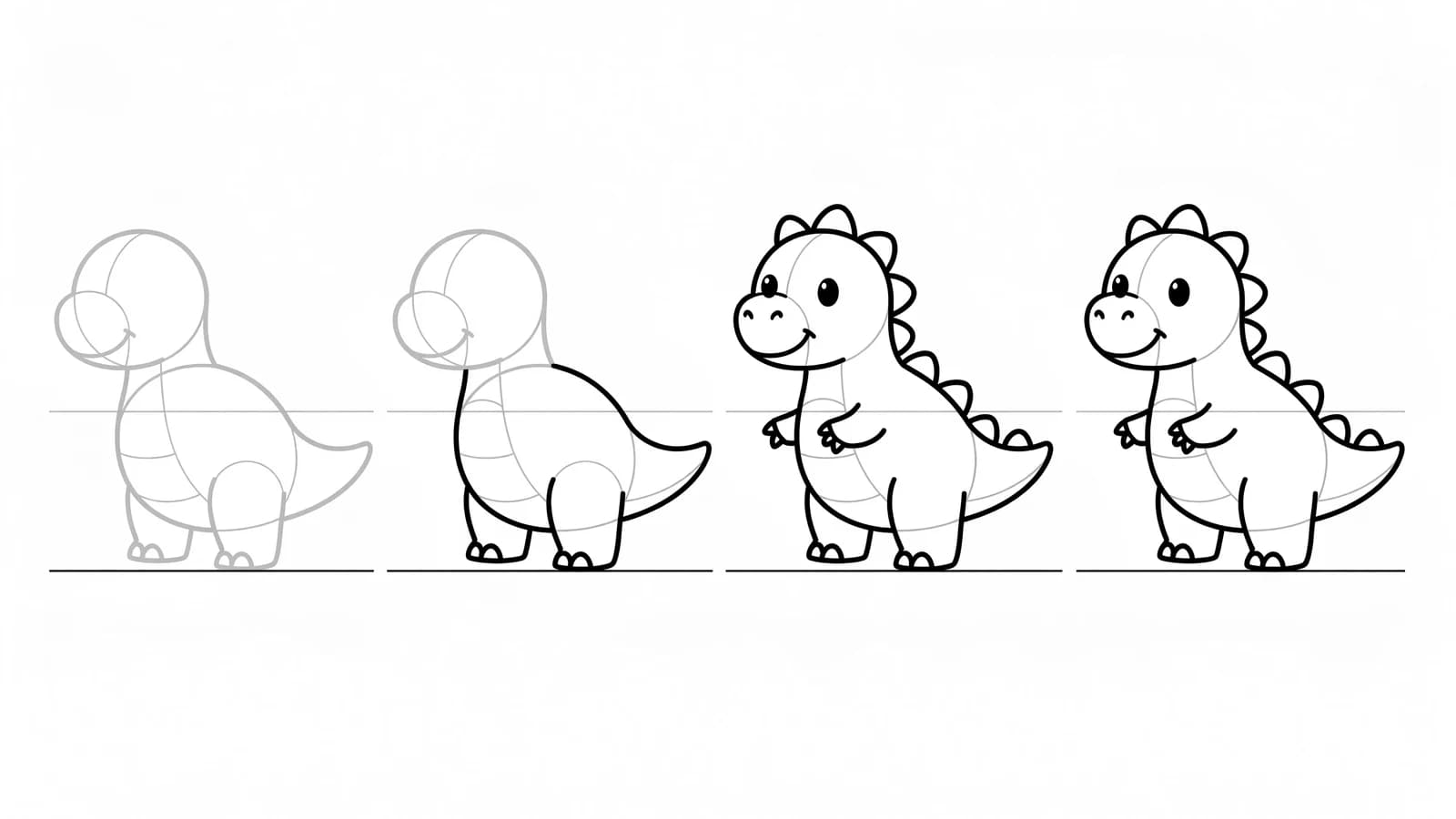
Step 1: Block in the head and body with simple shapes
Start with a triangle near the top of your paper for the head, then add a large circle below and behind it for the body. The Natural History Museum's dinosaur lesson begins the very same way, building a T-rex from a triangle, a circle, and a rectangle before any details go in (Natural History Museum). Keep the pencil light and loose here, the way paleo-artist David Orr does, holding off on dark lines until the final outline (David Orr).
Step 2: Connect the head to the body with a neck
Draw two curved lines from the bottom of the triangle head down to the top of the body circle to make a short, thick neck. A T-rex neck is sturdy, not skinny, so leave a little space between those two lines. This is also where you sketch a gentle curve along the top to start the back.
Step 3: Add the long tail
From the back of the body circle, draw a long tail that is fat where it meets the body and tapers to a point. Let it sweep down and then curl up a little at the tip for a lively pose. The tail balances the heavy head, so make it nice and long, about as long as the head and body together.
Step 4: Draw the legs and feet
Add one big, powerful back leg under the body, shaped a bit like a chicken drumstick, wide at the top and narrow at the ankle. Then add three thick toes with small claws at the bottom. Draw a second leg peeking out behind the first so your dino stands firmly. T-rex legs are huge, so do not make them too thin.
Step 5: Add the tiny arms
Here is the fun part. Up near the chest, draw two short, skinny arms with two little clawed fingers each. They are famously small, so keep them close to the body and much thinner than the legs. The size difference between the mighty legs and the tiny arms is what instantly says "T-rex."
Step 6: Shape the face and open mouth
Inside the triangle head, draw a curved line to split the mouth open, then add a row of pointy teeth along the top and bottom. Put a round eye high on the head with a small dot inside, and a little nostril near the tip of the snout. For a cute dinosaur, make the eye big and the teeth small. For a fierce one, narrow the eye and show long, jagged teeth.
Step 7: Outline and erase your guides
Trace the lines you want to keep with a firmer stroke or a black pen, smoothing the shapes as you go. Then erase the leftover circle and triangle guides and any stray marks. Add a few short lines along the belly for tummy folds and a bumpy ridge down the back if you like.
Step 8: Add details and color
Draw small scales, spots, or stripes along the back and tail to give your dino some texture. Color it a leafy green, a sandy brown, or any wild color you want, building the shade up in light layers rather than pressing hard once. A lighter belly and darker back make it look round and real.
What artists recommend (and common mistakes)
- Start with basic shapes, not the outline. The most common mistake is trying to draw the whole dinosaur shape in one go. Blocking in a triangle, a circle, and a tail first keeps the proportions right, which is exactly how museum and classroom lessons begin (Natural History Museum).
- Keep early lines light and loose. Pressing too hard too soon locks in mistakes you cannot erase. Sketch lightly, then commit to a dark outline only at the end, the order an Outschool dinosaur class teaches: light sketch, then marker outline, then erase and color (Outschool).
- Work in clear stages. David Orr builds a dinosaur in separate steps, initial shapes first, then detail planning, then the final outline before shadows and color, so each stage solves one problem (David Orr).
- Mind the size of the parts. Tiny arms and a huge head and tail are what make a T-rex read as a T-rex. If the arms look normal-sized, it stops looking right.
Fun variations to try
- A cute baby dino: Make the head bigger, the body rounder, the eyes huge, and the teeth small for a friendly hatchling.
- A long-neck (Brachiosaurus): Swap the triangle head for a small head on a tall, curving neck, with four thick tree-trunk legs.
- A spiky Stegosaurus: Add a row of diamond plates down the back and four spikes on the tail.
- A Triceratops: Give it a big bony frill behind the head and three horns on the face.
Frequently asked questions
How do you draw a dinosaur for beginners? Start with a triangle for the head and a circle for the body, then add a neck, a long tail, big legs, and tiny arms. Building from basic shapes first keeps everything in proportion, which is why beginner lessons start there.
How do you draw an easy T-rex? Use a triangle head, a round body, a long tapering tail, two huge back legs, and two tiny arms with little claws. Add an open mouth with pointy teeth and a high round eye, then outline and color.
How do you draw a cute dinosaur? Make the head and body round, the eyes big, and the teeth small and blunt. Cute comes from large eyes and soft, rounded shapes, so keep every line gentle and avoid sharp angles.
Keep drawing and coloring
Once your dinosaur is stomping across the page, give it some friends. Try how to draw a dragon for a fire-breathing cousin, or how to draw a turtle for another shelled reptile. For more ideas, browse our animal drawing ideas list, then print our free animal coloring pages to fill a whole prehistoric world with color.