Friendly Skeleton Buddy
#anatomy#skeleton
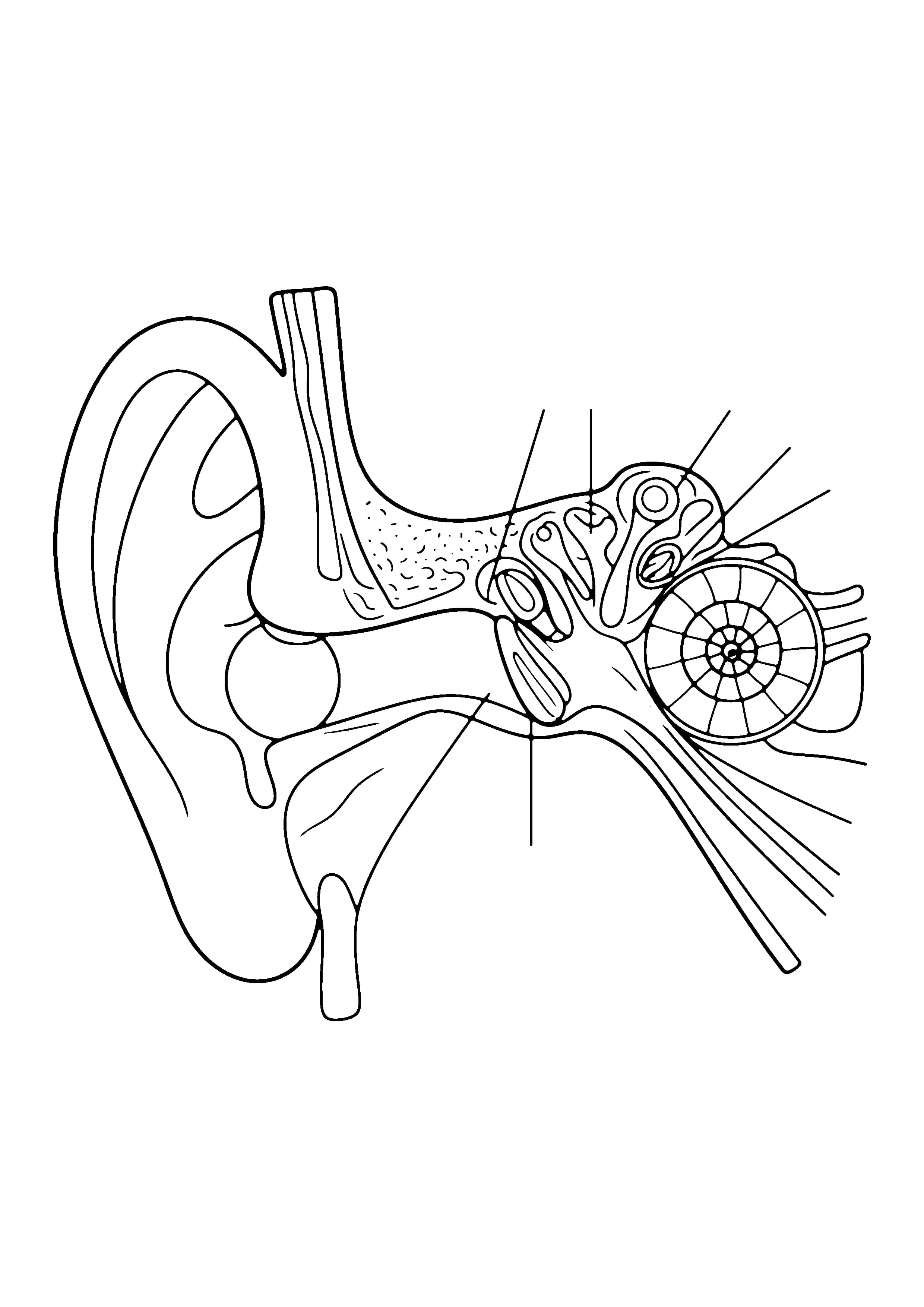
A cross-section of the human ear showing the outer flap, canal, eardrum, middle-ear bones, and spiral cochlea with labels — an educational coloring page.
Listen up and color the parts that let you hear on this human ear coloring page. The cross-section view reveals the outer ear flap and canal, the round eardrum, the three tiny bones of the middle ear, and the spiral cochlea coiled in the inner ear, with blank label lines pointing to each part. There is fine detail in those little bones and the snail-shaped cochlea, so the page suits older kids and students more than toddlers. Fun fact: the three middle-ear bones are the smallest bones in your whole body, and they pass sound vibrations along to the cochlea, which turns them into signals your brain understands. Coloring the outer, middle, and inner sections in different shades makes the path of sound easy to follow. Print it on US Letter or A4 for a senses lesson and label the parts as you finish coloring each one.