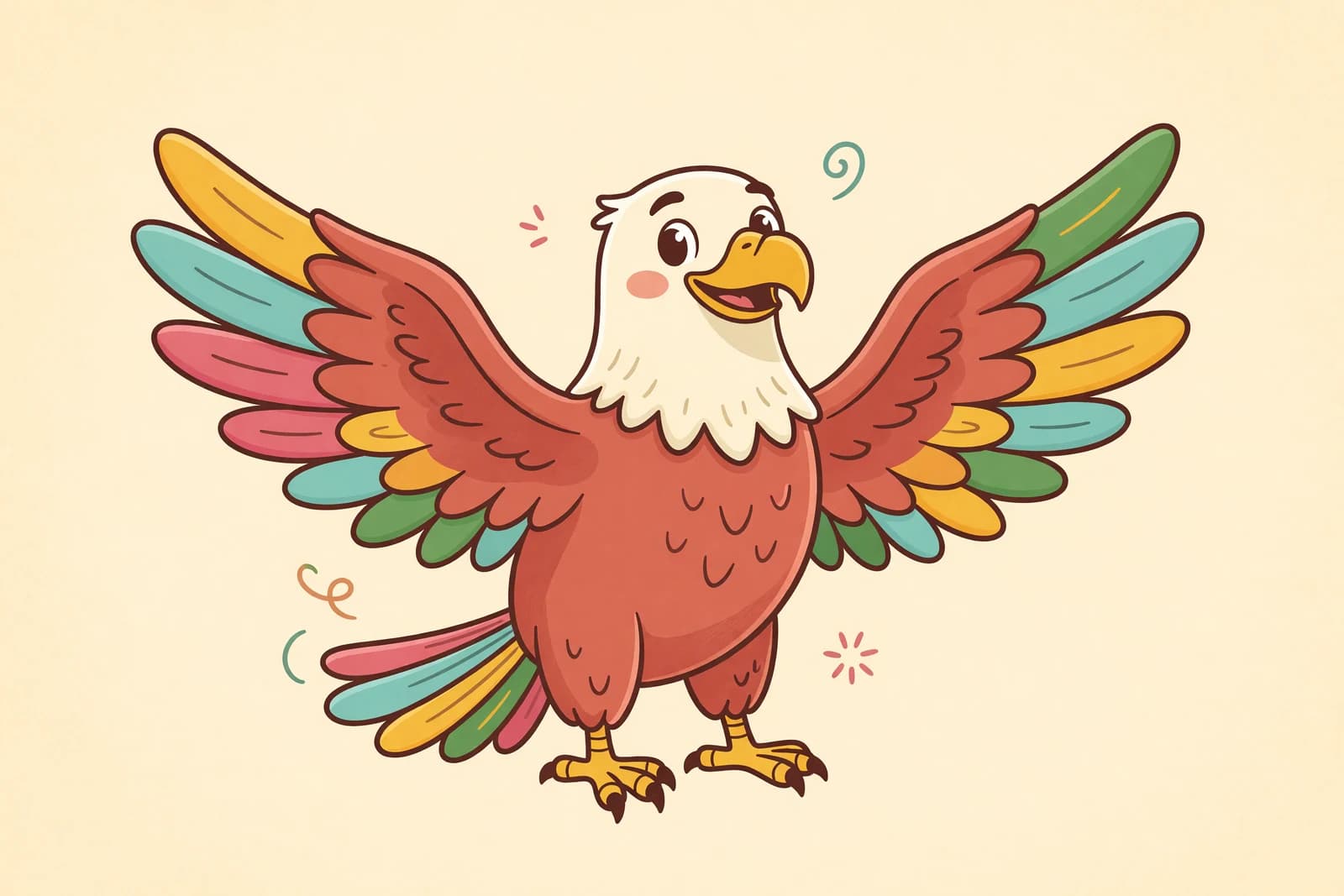
Learn how to draw an eagle the easy way, from a simple bean-shaped body to bold wings, a hooked beak, and sharp talons. A beginner-friendly, step-by-step guide.
An eagle looks powerful, but underneath all those feathers it starts as a couple of plain shapes. Once you block in a simple body and head, the wings, hooked beak, and sharp talons fall into place. That is the secret to an easy eagle drawing: build the big forms first, then add the feathery details last. In this guide you'll learn how to draw an eagle step by step, with a bonus look at a bald eagle and a close-up eagle head.
Keep your first lines light and loose. You will tidy them up once the proportions look right. Let's begin.
What you'll need
- A pencil and an eraser
- Plain paper
- Optional: a softer pencil like a 4B for shading, plus brown, white, and yellow crayons or markers
How to draw an eagle step by step
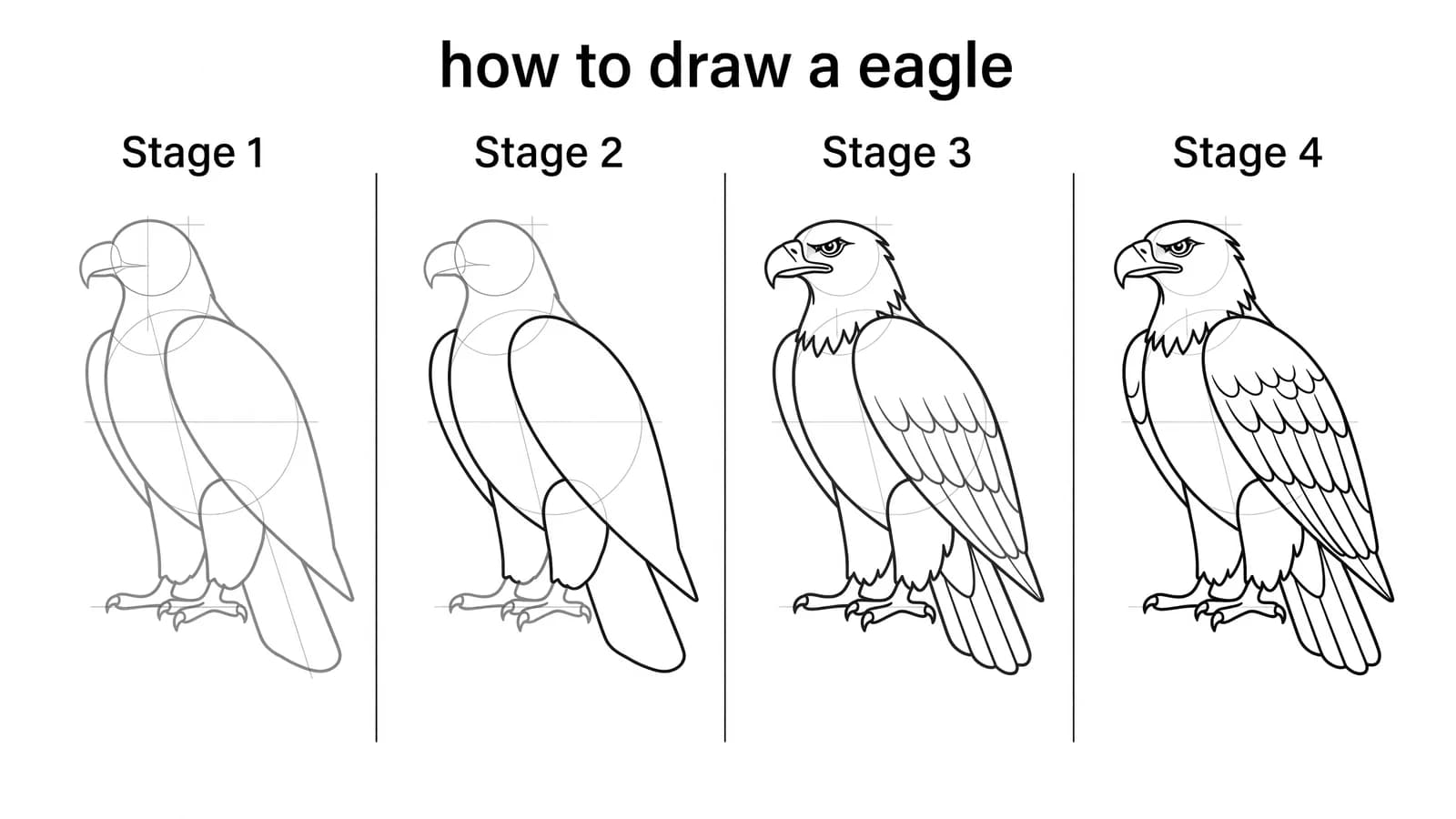
Step 1: Block in the body
Start with simple construction shapes. The beginner lesson from BioWars builds the eagle from a bean-like shape for the body, then smaller shapes for the rest. Draw one tilted bean or egg in the middle of your page for the chest and belly. Keep it light. This is just a placeholder you will refine later.
Step 2: Add the head and neck
Above the front of the body, draw a small circle for the head. Connect it to the body with two short curved lines for the neck. An eagle's head sits forward and slightly down, ready to scan for prey, so angle the circle a little ahead of the chest rather than straight up.
Step 3: Sketch the hooked beak
On the front of the head circle, draw the beak. An eagle's beak is short, deep, and curves sharply down into a hook at the tip. Draw the top half first as a curved triangle that ends in a point that bends downward, then add the smaller lower half beneath it. The hook is what makes it read as a bird of prey.
Step 4: Draw the wings
From the shoulders, sweep out two big wings. For a perched eagle, fold them down along the back so they sit like a cape. For a flying eagle, spread them wide with the long flight feathers fanning out like fingers at the tips. Draw the top edge of each wing as one bold curve before you worry about feathers.
Step 5: Add the tail and legs
Below the back of the body, add a short, fanned tail made of straight feathers. Then draw two strong legs coming down from the front of the body. Keep the upper legs thick and feathered, narrowing to scaly feet.
Step 6: Add the talons
At the bottom of each leg, draw the feet with curved, pointed talons. Three toes face forward and one faces back, each ending in a sharp, hooked claw. For a perched eagle, wrap the talons around a branch. These curved claws give the eagle its grip and its fierce look.
Step 7: Suggest the feathers
Now refine the rough shapes into feathers. BioWars advises going over your guidelines with zig-zag lines to suggest feathers and adding shading later, using a softer pencil only once the structure is correct. Add short overlapping strokes on the chest, longer ones along the wings, and a clean row at the wing tips and tail. Do not draw every single feather. A few well-placed groups read as a full coat.
Step 8: Outline and color
Trace the lines you want to keep, then erase the bean shape and other guides. For a brown eagle, color the whole body in warm browns. For a bald eagle, color the body and wings dark brown, leave the head and tail white, and make the beak and feet bright yellow.
What artists recommend (and common mistakes)
The biggest beginner trap is rushing the details. The BioWars lesson builds the whole eagle from simple shapes first and saves the feathers, talons, and shading for its later steps, which is the order that keeps proportions honest. Betty Edwards, in Drawing on the Right Side of the Brain, makes judging proportion and relationships one of her core drawing skills rather than something you guess at. The classic way to apply it: hold your pencil at arm's length to compare the size of the head against the body, or the wing length against the tail, before you commit the lines. Here is how to keep yours strong:
- Shapes before feathers. Get the bean body, head circle, and wing curves balanced first. Feathers added over a wonky frame just lock in the mistake.
- Make the beak short and hooked. A long, thin beak turns your eagle into a chicken or a duck. Keep it deep, curved, and hooked at the tip.
- Group the feathers. Suggest feathers in clusters with zig-zag edges rather than drawing each one. It looks more natural and saves you a lot of time.
- Anchor the talons. Whether perched or flying, give the talons a clear curve and a point. Limp, straight toes drain the power right out of the pose.
Fun variations to try
- A bald eagle: Dark brown body with a crisp white head and tail, plus a yellow beak and feet.
- An eagle head close-up: Zoom in on just the head and shoulders to focus on the eye, the hooked beak, and a few sharp brow feathers for a fierce portrait.
- A soaring eagle: Spread the wings wide and fan the tip feathers like fingers, with the body small against an open sky.
- A landing eagle: Tilt the wings up, drop the talons forward, and fan the tail down as it reaches for a branch.
Frequently asked questions
How do you draw an eagle for beginners? Block in a tilted bean shape for the body, add a small circle for the head, then build out the hooked beak, wings, tail, and taloned feet. Save the feathers and shading for last. Starting with those simple shapes is what keeps the proportions right.
How do you draw a bald eagle? Draw the same eagle shapes, then color the body and wings dark brown and leave the head and tail white. Add a bright yellow hooked beak and yellow feet. The white head and tail are the markings that make it a bald eagle.
How do you draw an eagle head? Start with a circle for the skull, add the short hooked beak on the front, and place a sharp eye just behind it. Add a heavy brow line above the eye for that fierce stare, then suggest a few feathers around the neck with short zig-zag strokes.
Keep drawing and coloring
An eagle is a great way to practice building big shapes before fussy details. Try how to draw a butterfly next for a gentler set of wings, or test your shapes-first skills on how to draw a spider. For more inspiration, browse our easy animals to draw list, then print free animal coloring pages to bring your eagle to life.