
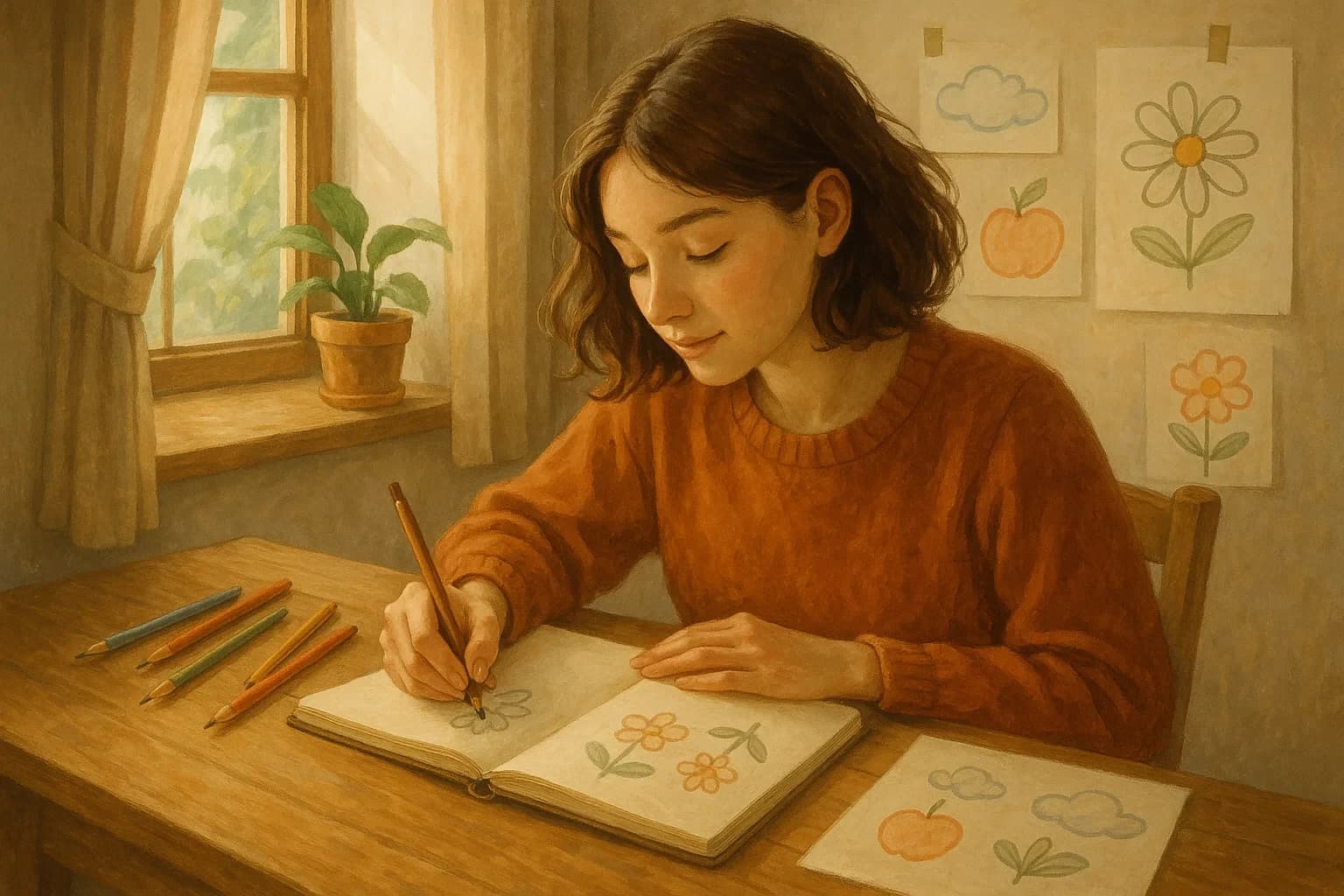
Have you ever wanted to draw but didn’t know where to start? You’re not alone. Many beginners feel stuck staring at a blank page, unsure what to draw or whether their sketches will even look good. The truth is, drawing is less about talent and more about curiosity, patience, and consistent practice.
This guide is made for beginners like you. We’ll explore simple drawing ideas, step-by-step tutorials, fun exercises to build skills, and practical tips to boost creativity. You’ll also discover common beginner mistakes to avoid and answers to questions many new artists ask.
No prior experience is needed. By the end of this post, you’ll feel ready to pick up a pencil and start sketching confidently.
Keyword: drawing ideas for beginners
Starting with simple sketches is like tasting small bites before a full meal. Easy drawing ideas help you gain confidence without feeling overwhelmed. Look around you: fruits on the table, your favorite mug, clouds in the sky, or simple shapes like circles and triangles are perfect for practice.
Beginner Scenario: Imagine sitting in a café with a blank notebook. You pick up a pencil and doodle a steaming cup of coffee. It doesn’t need to be perfect—the goal is just to get lines on paper.
5 Easy Ideas to Start Drawing Immediately
Myth-Busting Insight: You don’t need to create a masterpiece every time. Even messy sketches teach your hand to move and your eyes to observe.
Keyword: easy drawing tutorials
Following a tutorial is like cooking a new recipe—you follow steps and adjust as needed. Tutorials guide your hand, helping you understand shapes, lines, and shading without feeling lost.
Beginner Scenario: You open a YouTube video teaching how to draw a cat. You pause after each step, replicate what you see, and slowly, a cat appears on your paper. It’s satisfying and builds confidence.
3 Resources for Guided Practice
Curiosity Hook: Even if your first cat looks more like a potato, every line improves hand-eye coordination and prepares you for more complex drawings.
What Not to Do: Avoid skipping steps in a tutorial. Each small instruction builds your foundational skills.
Keyword: fun drawing exercises
Think of drawing exercises as stretches before a workout. They prepare your hands and mind, improve focus, and build muscle memory. You can try timed sketches, doodle prompts, or drawing random objects in your room.
Beginner Scenario: You set a timer for 10 minutes and draw everything on your desk—books, pens, your phone. By the end, you have several quick sketches that help you notice details you normally miss.
5 Fun Exercises to Try This Week
Light Humor: Don’t worry if your sketches look funny—sometimes the weirdest doodles make the best practice.
Myth-Busting Insight: You don’t need hours of practice daily; short, consistent sessions work wonders.
Keyword: simple sketch ideas
Creativity is like a smoothie—you mix ordinary ingredients to discover something new. Simple sketch prompts, combining shapes, or drawing imaginary creatures helps you think outside the box.
Beginner Scenario: You draw a triangle, circle, and square, then turn them into a robot or fantasy creature. Suddenly, your simple shapes become a mini-world of imagination.
3 Prompts for Creative Practice
Curiosity Hook: Even if it feels silly, letting your imagination run wild improves problem-solving and artistic thinking.
What Not to Do: Don’t judge your sketches as “good” or “bad” immediately; creativity grows with exploration.
Keyword: beginner drawing tips
Learning to draw is like learning to ride a bike: you fall, get up, and eventually, the balance clicks. Key tips include using basic supplies, practicing regularly, and staying patient.
Beginner Scenario: You feel frustrated because your lines aren’t perfect, but after 15 minutes of daily practice, you notice progress in proportions and shading. Small, consistent steps matter more than perfect sketches.
4 Tips to See Improvement Quickly
Light Humor: Think of smudges as proof you’re trying—they’re part of the learning journey.
Myth-Busting Insight: Expensive art supplies are not required—your effort matters more than the tools.
Many beginners fall into the same traps:
Overthinking Every Line – Perfectionism stalls progress.
Do this instead: Focus on capturing shapes and proportions, not flawless sketches.
Comparing Yourself to Pros – Your sketches aren’t meant to compete with experts.
Do this instead: Celebrate small wins and enjoy personal growth.
Skipping the Basics – Jumping to advanced subjects can be frustrating.
Do this instead: Master simple shapes and exercises first.
Not Practicing Regularly – Inconsistent practice slows improvement.
Do this instead: Commit to short daily sessions—even 10 minutes counts.
Remember, every mistake is a stepping stone toward improvement.
Q1: Do I need expensive supplies to start drawing?
Not at all. Beginners can start with simple pencils, erasers, and paper. Just like learning to cook doesn’t require a gourmet kitchen, your art journey begins with the basics. You can always upgrade tools later.
Q2: How long does it take to improve as a beginner?
Improvement varies, but consistent daily practice—even 10–15 minutes—shows results in a few weeks. Small, regular efforts add up over time.
Q3: Can I learn drawing on my own?
Absolutely! Many artists are self-taught. Tutorials, books, and daily practice allow you to progress at your own pace. Patience and curiosity are key.
Q4: What’s the best time of day to practice drawing?
Anytime you feel focused and relaxed works. Some prefer morning sketches to start creatively, others enjoy quiet evenings. The best time is when you can practice consistently.
Drawing is a journey of small, joyful steps. From easy sketch ideas and guided tutorials to fun exercises and creativity-boosting prompts, beginners have plenty of ways to start today. Avoid common mistakes, practice consistently, and remember: your sketches don’t have to be perfect—they just need to exist.
Take one small step now: grab a pencil, choose a simple object, and start sketching for 10 minutes. You’ll be amazed at how quickly your confidence grows.
Your creativity is waiting—start drawing and enjoy every line along the way.
Enjoyed this post? Check out 15 Easy Aesthetic Drawing Ideas